

How PoE Works
In a PoE infrastructure, there are two main roles:
• PSE (Power Sourcing Equipment) — the equipment that supplies power, typically a PoE switch or PoE injector
• PD (Powered Device) — the endpoint device that receives power, such as a camera, phone, or wireless access point
Simply put, the Ethernet cable performs two functions at once: it carries network data to the device while simultaneously delivering low-voltage DC power.
One important point for IT specialists and procurement teams is that all of this is standardized.
A compatible PoE switch does not indiscriminately supply power to every port. It first checks whether the connected device supports PoE and then negotiates how much power the device requires.
That is exactly why PoE is so popular in offices, stores, warehouses, and branch locations. It reduces dependence on nearby electrical outlets, provides greater flexibility in equipment placement, and simplifies centralized power management from the network cabinet.
Why Businesses Use PoE
The main advantage of PoE is not that the technology sounds modern. Its real value is that it reduces operational friction.
With PoE, you can:
• install access points and cameras where they are actually most useful, not only near power outlets
• reduce the amount of electrical installation work required for low-power devices
• centralize backup power through a switch connected to a UPS
• simplify troubleshooting when power and network connectivity are managed within the same infrastructure layer
• improve total cost of ownership when deploying devices at scale
For a growing business, this makes PoE especially valuable wherever uptime, scalability, and tidy deployment matter.
What to Check Before Buying
Before choosing PoE equipment, pay attention to three things:
• Power budget: a 24-port PoE switch cannot always deliver maximum power on all ports simultaneously
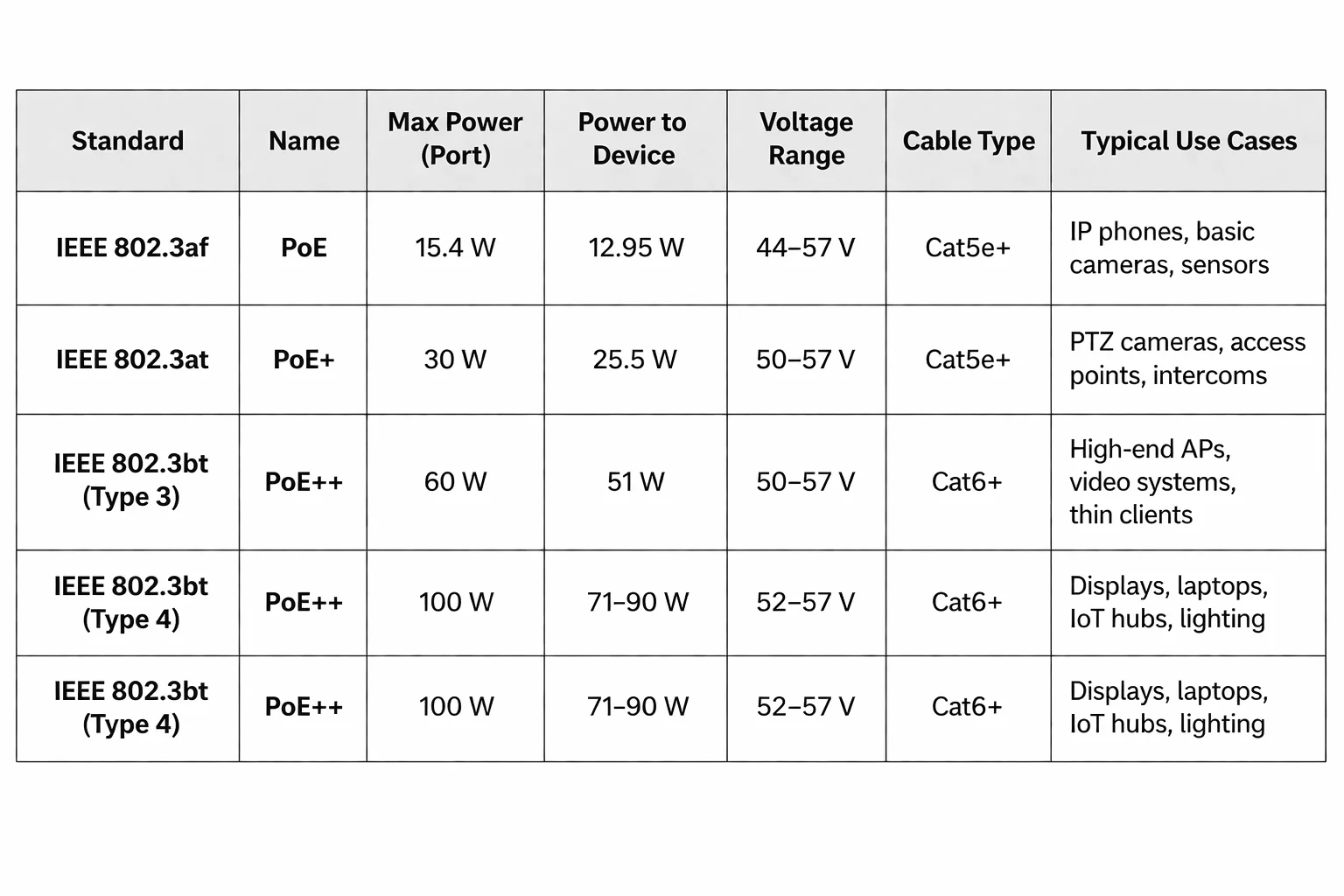
• Device requirements: different endpoint devices require different PoE standards
• Cable length: a standard Ethernet segment is usually limited to 100 meters
In short, PoE is, above all, a practical infrastructure tool: fewer cables, easier installation, more flexible equipment placement, and more convenient centralized control.
Next Step
The next step is to understand how to choose the right PoE switch for your infrastructure in our detailed guide to PoE switches and injectors.